Industrial cooperation on rare earths and security challenges: what future for the franco-japanese bilateral relationship?
17/04/2026
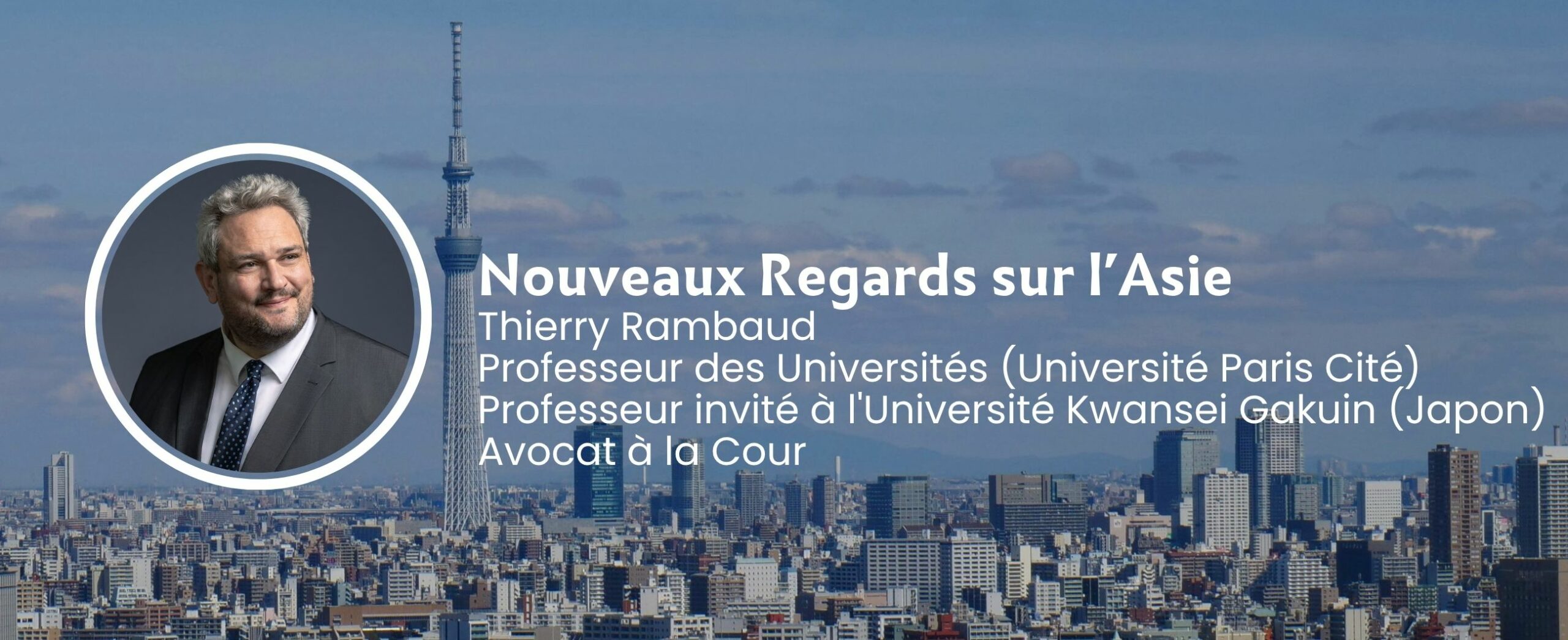
By Thierry Rambaud
The President of the French Republic, Emmanuel Macron, accompanied by his spouse, paid an official visit to Japan from March 31 to April 2, 2026. This visit was followed by a state visit to South Korea on April 2 and 3, 2026.
In an especially complex international context marked by ongoing conflicts in Ukraine and Iran, as well as rising tensions in the Indo-Pacific region, the presidential visit served to highlight and strengthen the “exceptional partnership” that now binds France and Japan. This partnership is notably framed within the roadmap for Franco-Japanese cooperation (2023–2027).
While 2028 will mark the 170th anniversary of the establishment of diplomatic relations between the two countries, it is clear that Franco-Japanese cooperation is more essential and strategic than ever. This is evidenced by the joint Franco-Japanese statements published on the website of the French Presidency, particularly regarding artificial intelligence, global health, and cooperation in the field of nuclear energy. Deeply rooted in history, this partnership is firmly oriented toward the future. As a liberal democracy committed to the rule of law and the protection of fundamental freedoms, Japan undoubtedly represents a reliable and solid partner for both France and the European Union.
These shared values were clearly demonstrated during a Franco-Japanese symposium that we co-organized with our colleague Takeshi Inoue on the “Reception of International and European Human Rights Law in France and Japan,” held at Université Paris Cité on March 10, 2026. This convergence of values also explains the permanent presence of a Japanese magistrate alongside the Ambassador and Consul of Japan in Strasbourg, at the Council of Europe. This magistrate is tasked with monitoring the work of the Council of Europe and contributing to a better understanding in Japan of the case law of the European Court of Human Rights. This is a fine example of legal cooperation serving a broader understanding of the universality of human rights.
Sharing a common confidence in multilateralism, the role of international organizations, and the regulatory function of international law, both countries are well positioned to work together toward common solutions to the contemporary challenges facing the international community in the fields of defense, industry, and scientific and technological research.
In this regard, one can only welcome the excellence of industrial and scientific cooperation between public and private actors in both countries. As a native of Béarn, I would like to highlight the importance of the ongoing project to build a rare earth recycling plant at the Lacq site in the Pyrénées-Atlantiques. This project follows the “Franco-Japanese Declaration on Cooperation in the Field of Critical Minerals” signed on May 1, 2024, between the Japanese Minister of Economy, Trade and Industry and the French Minister of Economy, Finance and Industrial Sovereignty. This facility will become the first rare earth recycler in Europe. To recall, rare earths consist of a group of 17 strategic metals with similar properties, such as dysprosium and terbium, which play a central role in the production of permanent magnets. These components are then used in numerous everyday electrical devices, such as electric vehicle motors. The total financing for this project amounts to €216 million: €106 million provided by the French state, and €110 million in equity and shareholder loans from the Japan France Rare Earth Company, which brings together JOGMEC (Japan Organization for Metals and Energy Security) and Iwatani Corporation. This project follows earlier investments by the Japanese group Toray, amounting to €100 million, also in the Lacq basin, in the field of carbon fiber [1].
Nevertheless, further steps remain to be taken. One may well agree with Professor of Political Science (Japan) at INALCO, Guibourg Delamotte, who wrote in an op-ed published in Le Monde on March 31, 2026, that a reciprocal access agreement should be concluded between France and Japan in the field of military cooperation. As she notes, “Reciprocal access agreements are the simplest means of facilitating military exercises, which serve both as a form of diplomacy, a projection of power, and the demonstration of a shared deployment capability. Moreover, they attest to solidarity. By increasing the number of joint exercises, forces become interoperable, or even, as in the case of the British and Australian navies, interchangeable” [2].
Faced with major geopolitical challenges, France and Japan undoubtedly need one another, and their partnership must continue not only to deepen but also to expand.
[1] See Toray Carbon Fibers Europe announces the launch of its new production unit, toray-cfe.com, March 9, 2026; Toray CFE invests €100 million to expand its carbon fiber capacity in the Pyrénées-Atlantiques, L’Usine Nouvelle, December 2, https://www.gifas.fr/press-summary/toray-cfe-investit-100-m-pour-ses-capacites-de-fibres-de-carbone-dans-les-pyrenees-atlantiques
[2] https://www.lemonde.fr/idees/article/2026/03/31/la-france-et-le-japon-ont-besoin-d-un-accord-d-acces-reciproque-pour-aller-plus-loin-dans-leur-cooperation-militaire_6675645_3232.html?search-type=classic&ise_click_rank=1
*****
Thierry Rambaud is a tenured professor of public law at Université Paris Cité and at Sciences Po (Paris). He is a visiting professor at Kwansei Gakuin University in Japan, where he teaches European studies. He is currently preparing an introductory book on Japanese law with his colleague Takeshi Inoue. A graduate of the Advanced European Studies Cycle at INSP (formerly ENA), he serves on the European Commission against Racism and Intolerance of the Council of Europe, after having been a visiting research professor at the College of Europe in Bruges.
He has held numerous public responsibilities, notably serving twice as a ministerial advisor and as Director of Studies, Recruitment, and Student Assessment at the ENA. He is currently “of counsel” at Mayer Brown, where he advises on European Union law, administrative law, and financing matters. He publishes in EU law, French public law, and comparative law, particularly in relation to Japan. He also studied archaeology at the Universities of Geneva and Paris Sciences & Lettres–EPHE, where he obtained a Master’s degree (M1) in this field.
This publication reflects the views and opinions of the individual authors. As a platform dedicated to the sharing of information and ideas, our objective is to highlight a diversity of perspectives. Accordingly, the opinions expressed herein should not be interpreted as those of the Fondation France-Asie or its affiliates.
