
Toward a 21th-century humanism, through the study of “oriental” languages.
02/04/2026
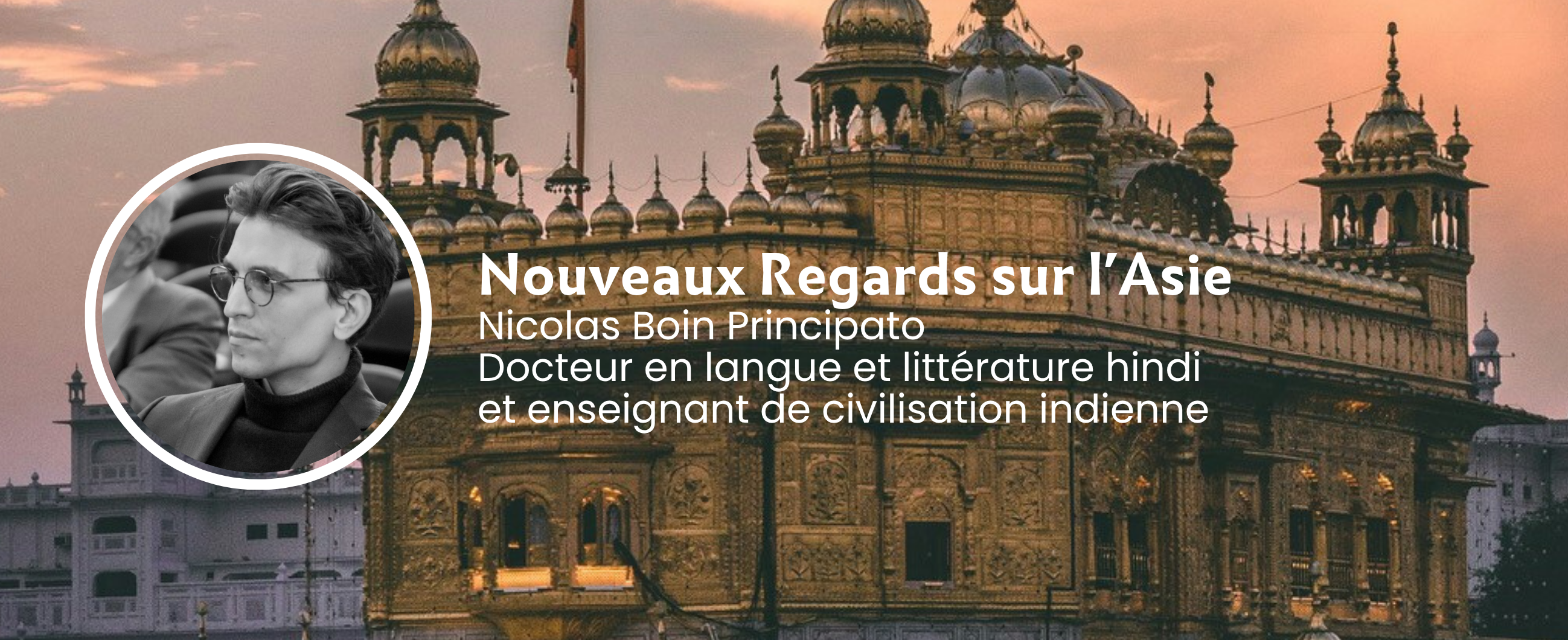
By Nicolas Boin Principato
In his recent work The Art of Peace, Bertrand Badie, a specialist in International Relations, reminds us that peace has long been thought of as the simple “non-war,” as a negative state, defined by default, by the absence of conflict rather than by the cultivation of lasting human relationships. Why, ultimately, have we so often reduced peace to this void between two confrontations, to this fragile parenthesis in the history of nations and of humankind?
And above all, how can we build a lasting peace? What is this art—or this science—that would finally allow us to move beyond the logic of force and enter into that of relationship? Without claiming to summarize Badie’s work in this way, part of the answer lies in learning “respect for the other.” Respecting the other is an art: it is learned and cultivated; today, we have all the means to do so. We simply need to accept making it a priority.
So, how can we achieve this? No doubt by beginning with a simple gesture: rediscovering a bit of curiosity. Daring to cross that first threshold which consists in overcoming the instinctive fear of the other, in taking an interest in them, whether they are our neighbor, a new colleague, or that “foreign” person encountered in the course of an evening, an event, a conversation...
At the heart of this art of peace lies the patient construction of a relationship that no longer considers differences as threats, but as resources, as mirrors capable of shedding light on ourselves.
For it is indeed through the languages, literatures, philosophies, histories, and imaginaries of the other that we learn to better understand our own way of inhabiting the world. Cultivating this openness is already a step toward peace.
We have forgotten it, but culture plays a considerable role in the way we enter into relation with others. It shapes our perspective, broadens our horizon, teaches us to recognize the dignity of what is foreign to us. Yet this tradition of studying the other, which was long one of the strengths of French culture, now seems to be eroding. In the frantic race of the modern world in which we are all caught, what are we running toward, and for what purpose? The contemporary norm would have success measured in terms of income, status, social visibility. But does all this truly make us more human, more attentive, or more capable of empathy toward others? Or quite the opposite? What type of world-society have we helped shape by elevating efficiency and performance to supreme values? And above all, what are we willing to sacrifice, of our sensitivity, sometimes even of our humanity, to achieve these goals?
This observation does not stop there: our universities, our schools, our entire educational system are today suffering the consequences. We no longer study, or very little, to become more human, more aware of the world, more capable of understanding and transforming it.
We study to climb a social ladder, secure a high income, belong to an elite that, too often, abstracts itself from collective issues. Let there be no misunderstanding: money is not an evil, it is necessary. But making it the sole horizon of an existence amounts to reducing human life to an accounting logic, to an accumulation of outward signs of success that say nothing about the quality of our relationships, our sensitivity, or our capacity to live together.
It is nevertheless urgent to recall how vital knowledge of the other is if we wish to hope for a lasting peace. Seeking to know the other, to understand what distinguishes us from them, is already to extend a hand. It is to signal that we have taken a step toward them, that we accept them as they are, and that our differences can become sources of mutual enrichment rather than reasons for mistrust or withdrawal. Peace is not decreed: it is built in these small gestures, in this willingness to understand before judging, in this capacity to welcome what “disorients” us.
France was a pioneer in this awareness. The first “orientalists” paved the way for knowledge of the other by studying languages, texts, and civilizations that had until then been largely ignored in Europe. Certainly, this undertaking was not without bias, as Edward Said and, after him, postcolonial studies have shown [1].
But it also enabled an unprecedented discovery of the existence of an Other: other cultures, other philosophies, other ways of thinking and inhabiting the world, whose richness was immense for Europe and, more broadly, for the West, as Raymond Schwab had already pointed out in the 1950s [2].
This interest in the other, often nourished by economic or geopolitical stakes, gave rise to an institution unique in Europe and probably in the world at the time of its creation: the École spéciale des langues orientales, founded in 1795 by the National Convention, heir to the École des jeunes de langues created in 1669 by Colbert, minister and principal administrator of Louis XIV. This school, now the Inalco (National Institute for Oriental Languages and Civilizations), embodies this conviction that peace, diplomacy, and understanding of the world pass through knowledge of the languages, cultures, and imaginaries of the other.
Indian studies
Without claiming to provide here a complete history of the languages taught at Inalco, I would nevertheless like to say a word about the study of Hindi [3], which concerns me more directly.
The first official position dedicated to this language within the École spéciale des langues orientales was created in 1828 by its first director, Antoine-Isaac Silvestre de Sacy (1758–1838). A remarkable fact: France was then the first country in Europe to open a chair dedicated to the teaching of Hindi, even before the British Empire, which had nevertheless been present in India for more than a century.
At the time, it was referred to as a chair of Hindustani, as the word “Hindi” was not yet in use; Hindustani was the more common term to designate the language of northern India [4], encompassing both what we now call Hindi and Urdu [5].
The first holder of this chair was Joseph Héliodore Sagesse Vertu Garcin de Tassy (1794–1875). His singular name, laden with symbolism, reflects the revolutionary era in which he was born. A particularly esteemed student of Silvestre de Sacy, he was chosen by the latter to found a department entirely devoted to the languages of India. Although de Sacy was above all a great specialist of Arabic and Persian, he had a deep interest in Indian cultures, an interest strong enough for him to decide to open this new chair, despite resistance.
For this project aroused strong opposition in the scholarly landscape of the time. Some claimed that Hindustani —or khari boli— [6] was not a “real” language, that Urdu literature had little importance (even though major poets such as Mir, Soz, or Sauda had already produced considerable works), and that Hindi literature simply did not exist. The objections were numerous, sometimes virulent, but Silvestre de Sacy stood firm, and Garcin de Tassy was able to begin his teaching.
In the decades that followed, Garcin de Tassy produced an immense body of work: thirty-five books, including a Hindi grammar, a learning method, and two major collections of Hindustani texts. His Rudiments of the Hindustani Language, published in 1829, were reissued several times. In the second part, published in 1833, he added real letters—some handwritten, others printed—presented in both scripts, accompanied by their translations.
His practical method included useful vocabulary and exercises, written in Urdu. By contrast, his collection of Hindvi poetry and prose [7], published in 1849, was entirely in Devanagari [8], already reflecting the cultural realities that would, a century later, lead to the formation of modern Hindi and Urdu literatures.
Garcin de Tassy also carried out several translations, mainly of Urdu literature. Among them is the first French translation of the Bāgh o Bahār (The Garden and the Spring) by Mir Amman (1748–1806), a foundational text of modern Urdu prose. The most surprising fact is that Garcin de Tassy never went to India. He had neither the means nor the time, at a time when such a journey required months. He read everything he could get his hands on, exchanged with scholars passing through Paris, and worked tirelessly. Without ever having set foot on Indian soil, he managed to accomplish a pioneering work that remains one of the foundations of Hindustani studies in France.
Since then, Inalco and, through it, France have never ceased working to improve the teaching of Hindi and, more broadly, to deepen knowledge of the languages and cultures of India. The list of names that have contributed to this effort would be long; but in the field of cultural studies carried out by French scholars, some deserve special mention insofar as their legacy continues to nourish our understanding of the Indian world.
Among them, Charlotte Vaudeville (1918–2006) occupies an essential place. A specialist of bhakti literature, she devoted her life to the study of Tulsidas (c. 1532–1623) [9], Kabir (c. 1440–1518) [10], Surdas (c. 1478–1583) [11], and numerous devotional traditions of northern India. Her work profoundly renewed the understanding of these corpora, long considered “popular” or “minor” by classical orientalists (rather Sanskritists).
In terms of pedagogy, several modern methods for learning Hindi have been developed in French: those of Nicole Balbir and Raj Bhan Singh first, then those of Annie Montaut, who still remains a central figure in the field today. With other teachers and in collaboration with Indian colleagues, she contributed to developing learning tools better adapted to contemporary needs.
Over the past twenty years, French publishing has also played a decisive role in the dissemination of Hindi literatures. Important translations have been published: the major novels of Nirmal Verma, Premchand, Jainendra Kumar, Alka Saraogi, Vinod Kumar Shukla, Krishna Baldev Vaid, Geetanjali Shree, as well as major essays by Anupam Mishra, Gandhi, and many other authors. Several publishing houses have contributed to this effort: Les Belles Lettres, L’Asiathèque, Actes Sud, Albin Michel, Banyan, but also other publishers that have enabled rare texts to be translated.
Nevertheless, a paradox remains: the more translations multiply, the more they seem to fade. In bookstores, they are rarely highlighted. In literary fairs, if one asks a reader or a literature enthusiast to name a Hindi author, they will most often mention an anglophone writer such as Rushdie, Arundhati Roy, or others. Translated works from Hindi, for their part, remain on the margins, relegated to specialized shelves or catalogs consulted only by insiders.
Why does this situation persist? Is it because the French publishing market favors so-called “dominant” languages? Because non-anglophone literatures suffer from a structural lack of visibility? Because India itself is too often perceived through the prism of English, the language of elites and globalization? Or because our collective imagination still struggles to recognize the linguistic and cultural plurality of this subcontinent?
Whatever the reasons, this paradox reveals something that has not changed much for decades: even though France has a long and prestigious tradition of Indian studies, literary voices from Hindi (and other Indian languages) still struggle to find their place in the public sphere. This is a challenge, but also a responsibility: to continue to translate, to teach, to transmit so that these works, these languages, and these imaginaries cease to be invisible and can finally fully engage in dialogue with the French-speaking world, because it is by knowing the worldview conveyed by the authors who have written in these languages that we will gain deeper access to their culture, and that we will ultimately be able to better understand them.
Conclusion
We live in a globalized world, and yet our knowledge of other cultures remains surprisingly fragmented. It is therefore hardly surprising that we still struggle to find a true common ground to continue the work initiated by our predecessors.
The example of Indian studies in France, from the enthusiasm of researchers to the constant efforts of translation, through the real but fragile interest of the public, reveals a broader trend, which concerns China, Iran, the Arab world, or Africa just as much: despite the intensification of exchanges, otherness is still often perceived at a distance.
To say that culture allows us to meet the other, to understand their imaginaries, to defuse fears, and to forge a more lasting peace may seem extremely banal, but transforming this obvious fact into action, into public policy, into educational choices, into personal commitment, is much less so. Peace is not built only in diplomatic chancelleries or in trade agreements: it is woven in libraries, in classrooms, in patient translations, in gestures of curiosity and attention that connect us to what is foreign to us.
If we truly want to build a more peaceful world, we will have to relearn to look at the other not as a threat or an abstraction, but as a partner in thought, a holder of knowledge, a mirror that helps us better understand our own humanity. This is an immense challenge, but also an opportunity: that of reconnecting with what France has done best when it was faithful to its humanist vocation, to open paths toward the other, and thereby open paths toward ourselves.
In this regard, in my thesis devoted to an approach to humanism in India, I undertook to explore what the intellectual, philosophical, and spiritual traditions of this country could teach us about the meaning of life and about the conditions for building a more just globalized society. India, through the plurality of its languages, its cultures, and therefore the diversity of its worldviews, offers a unique laboratory for rethinking what it means to “live together” on a planetary scale. I sought to understand how this plural culture could nourish a contemporary reflection on our way of being in the world, on our relationship to the other, on the responsibility we have toward one another.
In other words, my approach aimed to understand what it means to be a “citizen of the world” in the 21st century. How can we ignore today the issues that run through all peoples, whether ecological, social, cultural, spiritual, and how can we respond to them with lucidity, empathy, and discernment? It seems quite evident today that the peace of tomorrow will no longer be able to depend solely on the decisions of statesmen or major international institutions. It will also depend, and perhaps above all, on the involvement of each and every one of us: on our capacity to inform ourselves, to decenter ourselves, to listen, to understand, to build connections where others erect borders.
To my modest extent, I have sought to contribute to this dynamic: to show that knowledge of the other is not a simple exercise in erudition, but a vital necessity; that humanism is not a fixed heritage, but a task to be pursued; and that peace, to be lasting, must become everyone’s business, in the quiet constancy of our commitments, our readings, our encounters, and our daily choices.
[1] Edward W. Said, Orientalism. The Orient Created by the West, trans. Catherine Malamoud, foreword by Tzvetan Todorov, Paris, Le Seuil, 1980; expanded ed., 2002.
[2] Raymond Schwab, The Oriental Renaissance, Paris, Payot, 1950; reprint, 2014; reprint, Paris, Les Belles Lettres, “Classiques favoris” collection, introd. Thibaut Matrat, 464 p., 2024.
[3] Official language of India (alongside English), Hindi—which belongs to the Indo-Aryan language family—is spoken by more than 400 million speakers in India; it is also present on other continents thanks to numerous immigrant communities of varying duration. It has a rich and ancient literature in various dialects and, in a standardized form from the second half of the 19th century onward, it has been enriched by a very diverse modern literature in both genres and themes, serves as a language of instruction in many schools or as a language of communication in the media and cinema (sources: Inalco).
[4] Hindustani is a standardized form of the dialects of northern India, derived from medieval Hindvi, characterized by a common grammatical base, but which can be written in two systems (Devanagari for Hindi and the Perso-Arabic alphabet for Urdu) and incorporate different vocabularies depending on the cultural context.
[5] Urdu is the national language of Pakistan (around 109 million speakers) and is also one of the 22 official languages of the Indian Union. It is mainly spoken in northern India but also in certain Indian states such as Telangana and Maharashtra. It enjoys the status of official or co-official language in five Indian states and in the territory of Delhi. In India, Urdu is spoken by approximately 50 million inhabitants. According to Ethnologue 2018, there are 163 million Urdu speakers worldwide (sources: Inalco).
[6] Khari boli, also called Dehlavi, Kauravi, and “vernacular Hindustani,” is a Hindi dialect originating from the Delhi region. It is spoken mainly in rural areas of Delhi, in western Uttar Pradesh, and in southern Uttarakhand. This dialect constitutes the modern linguistic basis of standard Hindi and standard Urdu, providing their grammatical structure and a large part of their common vocabulary.
[7] Hindvi is a medieval generic term used by Persian-speaking and Indo-Muslim speakers to designate the local language of northern India, derived from Sanskrit and its evolutions (Prakrits and Apabhramsha), without corresponding to a single standardized language.
[8] Devanagari, from Sanskrit (devanāgarī), is an alphasyllabary writing system used for Sanskrit, Prakrit, Hindi, Nepali, Marathi, and several other Indian languages. It is one of the most widely used scripts in northern India and Nepal.
[9] Tulsidas (1532–1623) is a major Hindu poet and saint, famous for having composed in the vernacular Awadhi an accessible version of the Rāmāyaṇa, the Rāmcaritmānas. His work profoundly influenced devotional practices in Hinduism and contributed to spreading sacred narratives among non-Sanskritized populations.
[10] Kabir (15th century) is a mystical poet and religious reformer, a central figure of the bhakti tradition. His poems, often critical of rituals and religious elites, advocate a direct, inner, and universal spirituality. He is venerated by Hindus, Muslims, and Sikhs alike, making him one of the most powerful symbols of Indian spiritual pluralism.
[11] Surdas (15th–16th century) is a mystical poet and Hindu saint, renowned for his devotional songs dedicated to Krishna, particularly to the divine child (Bālakṛṣṇa). The presumed author of the Sūrsāgar, he is one of the great voices of bhakti in northern India, and his compositions played an essential role in the spread of Krishna devotion in the vernacular language.
*****
Nicolas Boin Principato is a specialist of the Indian world, trained at Inalco where he defended in 2026 a thesis devoted to modern humanism in India through the work of the poet Kunwar Narain and the aesthetic concept of sahridayatā. His academic path, marked by a double master’s degree between Paris and Mahatma Gandhi University in Wardha (where Sevagram, Mahatma Gandhi’s ashram, is located), led him to explore Hindi literature, the philosophical traditions of India, as well as Sanskrit aesthetic theories and their contemporary reinterpretations.
His current research focuses on: Indian humanism, the vernacularization of socialist thought through the work of Narendra Deva, modern reinterpretations of Indian aesthetic theories, as well as contemporary forms of bhakti in popular culture, in collaboration with researchers from Cambridge and Kathmandu. At the same time, he teaches Indian civilization, the history of religions, and the Hindi language at Inalco and at the Institut Catholique de Paris, while continuing active work in literary translation, notably of Kunwar Narain and Jaishankar Prasad. His approach articulates literature, philosophy, intellectual history, and aesthetics to shed light on Indian forms of intercultural dialogue and humanist thought.
This publication reflects the views and opinions of the individual authors. As a platform dedicated to the sharing of information and ideas, our objective is to highlight a diversity of perspectives. Accordingly, the opinions expressed herein should not be interpreted as those of the Fondation France-Asie or its affiliates.
